Monday, June 7, 2010

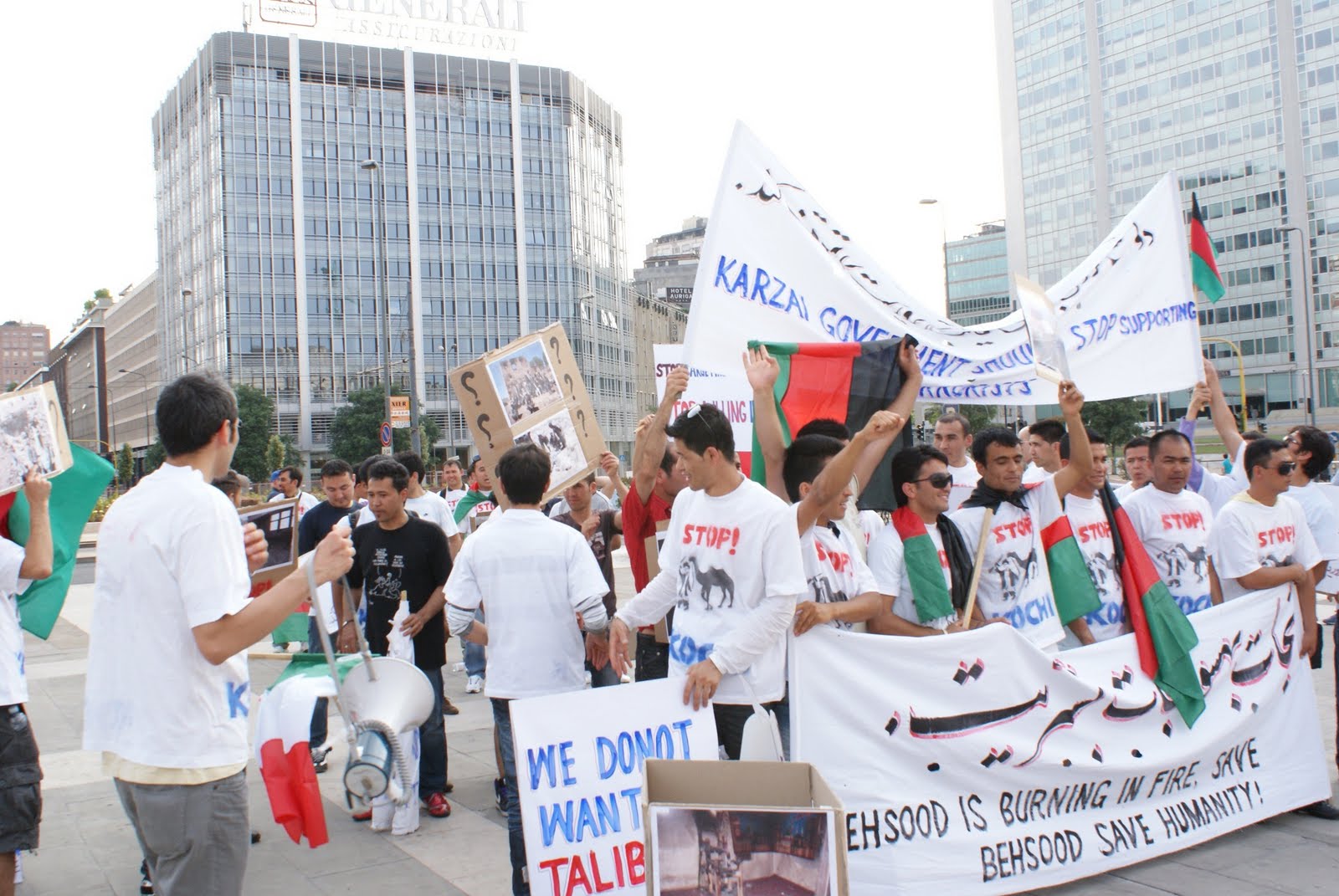
Photo reportage of the protest in Milan Italy against fierce Kochi Taliban attacks on Behsood, Nahur and Daimirdad districts of Afghanistan


Report posted by M. Amin Wahidi
Photos by: A. Basir Ahang, Jamshed Kasmaie, M. R Karimi, A.H Danish

Tens of Afghans, including Hazaras and non Hazaras together with Italian citizens, members of anti racism organizations and Italian students got together in a peaceful demonstration on Sunday June 6th at Duca D’Aosta Square, near central station of Milan in Italy to condemn the fierce Taliban nomadic attacks on Hazara villagers of Behsood, Daimirdad and Nahur.

Condemning the genocide of the Hazaras in Afghanistan, the protestors expressed their solidarity and communion with the victims of recent Nomadic Taliban attacks on Behsood, Nahur and Daimirdad districts.

The demonstrators got together at h.15:00 on local time and finished their gathering peacefully at 18:00 by reading a final statement containing 11 articles through which they asked the Italian government to take for consideration not to support a government that applies genocide on its citizens.

Emphasizing on peace and brotherhood among the ethnics of Afghanistan, the protestors explicated that the purpose of the gathering was not to insult any ethnic of Afghanistan; The Pashtoons, Hazaras, Tajiks and Uzbeks, Hindus and all other citizens of Afghanistan are brothers, but they had to condemn the cruel action of the Kochi nomad Taliban who took the lives of many innocents.

The protesters also condemned the peace dialogue game show conducted by president Karzai these days in Kabul to bring the Taliban back on power.

Most of protesters believed that the Taliban’s return on power would question the reason of beginning of Anti terror war, presence of the International Community, ISAF and NATO in Afghanistan and it flaws democracy and peace process gifted to Afghanistan.

Among the protesters, said one; “if the Taliban are to be back on power, we will have to turn back as much as of two centuries time.”

Speeches were given in three languages; Dari (Afghan Persian), Italian and English by three different speakers and the poets presented their poems for the victims of Behsood.

While among the screams of the crowed it was heard;

“No more violence!”

“No more terror!”

No more war!

“Stop killing innocents!”

“Stop targeting Hazaras!”

“Stop killing Hazaras!”

“We want peace!”

“We want justice!”

The written banners and placards the protesters carried contained these slogans and sentences in three languages:

“Behsood is burning in fire! Save Behsood, Save Humanity!”

“US, NATO and ISAF in Afghanistan break your silence!”

“Kochis attack, Taliban support, Karzai watches.”

“The Kochi nomads should be disarmed the same as all other illegal gun holder citizens.”

“The Kochies should be given located, based on article 14th of the constitution.

“Nomadism is the enemy of civilization!”

“Karzai should not support the terrorists anymore!”

“The dialogue with the Taliban means ignoring their crimes against humanity!”

The protest in Italy is taking place, while on Friday June 4th the Hazara Afghans in the east of the United States, got together in front of the United Nations Headquarters in New York to protest against injustice in Afghanistan and the massacre of the Hazaras by Karzai’s friends; The Kochi Taliban Nomad.

The Hazaras around the world would keep continuing their protests as seen, until a fundamental solution is sought for by the Afghan government even if necessary by the interference of the International Community, to end the threats of the Kochi Nomadism against the local inhabitants of Hazara Villages in Afghanistan.


clicca qui per la versione Italiana

Saturday, June 5, 2010

Gli Hazara Afghani in Italia uniti per protestare contro gli attacchi dei kuchi a Behsood, Daimirdad e nel distretto di Nahur


Gli Hazara afghani in Italia, si ritrovano uniti in una manifestazione per protestare contro i recenti attacchi dei nomadi talebani su pacifici villaggi hazara situati a Behsud, Daimirdad, nei distretti Nahur di Maidan e nella Provincia di Ghazni.

In questi recenti feroci attacchi, migliaia di abitanti innocenti sono stati costretti a scappare, molti sono morti, tra loro donne e bambini, le loro case sono bruciate sotto il fuoco delle armi dei nomadi talebani.

E’ inoltre da considerarsi genocidio la sistematica e ben organizzata serie di attacchi, i quali si propongono di spostare la guerra dalla parte meridionale del paese alle pacifiche province Hazara, bloccando il progresso della Società Hazara, che è una delle etnie più oppresse e discriminate dell'Afghanistan nella storia di questo paese.

I kuchi (talebani nomadi), armati di armi pesanti, arrivano con i loro veicoli e distruggono le terre agricole degli hazara, bruciano le loro case e li uccidono quando li catturano.

Massacrati per la prima volta dal re tiranno Abdul Rahman Khan nel 1890, per la seconda volta dai talebani nel 1990, e successivamente riconosciuti come il popolo più democratico e progressista nelle diverse arene civili e sociali, gli hazara sono sotto la pressione dei fondamentalisti e dei fanatici talebani che stanno imponendo una guerra contro di loro.

I talebani sanno che gli hazara, in quanto loro oppositori, costituiscono il muro più forte contro il fondamentalismo e il terrorismo nell’Afghanistan contemporaneo. Sanno che per entrare nel territorio politico e raggiungere i loro obiettivi dovranno prima oltrepassare questo muro.

Il Governo razzista di Karzai, comunque, sta dando ai talebani (gavels??) basandosi sulla loro politica razzista; non solo non sta reagendo contro i talebani ma li accoglie calorosamente nelle arene politiche del paese. Questo non è accettabile per gli hazara i quali sono stati da sempre vittime dei talebani.

Durante queste tre settimane di Guerra imposta contro pacifici distretti e province, il governo corrotto e razzista di Karzai e i suoi alleati internazionali, la rappresentanza speciale delle Nazioni Unite, la NATO e gli ufficiali dell’ISAF in Afghanistan sono tutti misteriosamente silenti e non mostrano nessuna reazione, osservando questo massacro come uno show di intrattenimento.

Gli hazara danno valore al processo di pace e democrazia del loro paese, nonostante essa sia fragile e simbolica. Basandosi su questi valori, dopo la guerra hanno gettato le loro armi per iniziare una nuova era con la comunità internazionale e per ricostruire il loro paese lacerato dalla guerra, ma hanno dovuto scontrarsi con un governo razzista, l’opposto di ciò che si meritavano.

Considerando gli anni precedenti, gli hazara hanno giocato un ruolo significativo nella legittimazione delle elezioni in Afghanistan con una presenza rimarcabile di donne e uomini di diverse città e province.

Nuovamente, quest’anno mentre le elezioni parlamentari si avvicinano , i fanatici fondamentalisti non tollerano una presenza forte degli hazara che legittimi le elezioni, cosicché hanno attaccato le loro aree, supportando i nomadi kuchi ed utilizzando la violenza.

Dal 2002, gli hazara sono stati un supporto alla pace in Afghanistan, muovendosi rapidamente nei confronti dell’educazione su livelli differenti.

Gli hazara hanno supportato il processo di democratizzazione del paese da molto tempo, giocando il ruolo maggiore nelle elezioni presidenziali e parlamentari nazionali e negli esercizi dei processi di pace. Loro sono sempre stati una società di supporto del governo a dispetto delle discriminazioni etniche, dei pregiudizi e dei maltrattamenti.

Gli hazara valutano i diritti umani e della libertà di pensiero, di parola e di espressione.

Valutano i diritti delle donne; la prima donna ministro nella storia dell’Afghanistan, la prima donna governatore e la prima donna sindaco nella storia dell’Afghanistan erano tutte donne hazara.

Le fattorie coltivano avena ed altri cereali al posto dell’oppio che alimenta ed arricchisce la guerra dei terroristi. Gli hazara sono contro ogni tipo di terrorismo e fondamentalismo e condannano ogni tipo di terrore ed attacco. Gli hazara vogliono pace, sicurezza, uguaglianza e giustizia sociale.

Per tutte queste soprammenzionate ragioni sono sempre minacciati dagli estremisti e dai fanatici fondamentalisti.

Attraverso dimostrazioni pacifiche, gli afghani hazara in Italia condannano ogni tipo di violenza, crimine contro l’umanità e condannano anche il genocidio che ha avuto luogo a Behsud, a Daimirdad e nei distretti di Nahur.

Vogliamo spingere il Governo Italiano e gli ufficiali europei a prendere in considerazione l’idea di non supportare più un governo colpevole di genocidio e di crimini contro l’umanità nei confronti dei propri stessi cittadini.

Continueremo la nostra pacifica e legale protesta fino a quando le nostre voci non verranno ascoltate dalla comunità internazionale e fino a quando essa romperà il suo silenzio ed interverrà per risolvere questo problema, garantendo così la sicurezza ai cittadini afghani. Se così non avvenisse, in Afghanistan gli hazara dovranno armarsi e difendersi da soli, in questo modo la pace relativa portata nel paese si romperà di nuovo e come tutti ben sappiamo le conseguenze di una tale guerra sarebbero imprevedibili.

Data e ora dell’incontro : domenica 6 Giugno 2010

Luogo dell’incontro: Piazza Duca D’Aosta, Stazione Centrale- Milano – Italia


Manifestazione a Roma nell 2008 contro gli attacchi dei Nomadi Talibani sugli Hazara

Manifestazione in Australia 3 contro gli attacchi dei Nomadi Talibani sugli Hazara

Manifestazione in Australia 2 contro gli attacchi dei Nomadi Talibani sugli Hazara

Manifestazione in Australia 3 contro gli attacchi dei Nomadi Talibani sugli Hazara

Manifestazione in Canada contro gli attacchi dei Nomadi Talibani sugli Hazara


Manifestazione in Svezia contro gli attacchi dei Nomadi Talibani sugli Hazara

Manifestazione in Norvegia contro gli attacchi dei Talibani sugli Hazara

Manifestazione nel Regno Unito contro gli attacchi dei Talibani sugli Hazara


Per olteriore informazione visita:


Quest'annuncio in Dari (Persiano)

Fermiamo il genocidio degli Hazara a Behsud!

www.kabulpress.org

www.hazaristantimes.wordpress.com

Chi sono gli Hazara di Afghanistan 1

Chi sono gli Hazara di Afghanistan 2

Chi sono gli Hazara di Afghanistan 3

Chi sono gli Hazara di Afghanistan 4

Chi sono gli Hazara di Afghanistan 5

Thursday, June 3, 2010

The Hazara Afghans in Italy are to protest against the Kochi Attacks on Behsud, Daimirdad and Nahur districts of Afghanistan


The Hazara Afghans in Italy are getting together for a demonstration to protest against Nomad Taliban’s recent attacks on peaceful Hazara villages of Behsud, Daimirdad and Nahur Districts of Maidan and Ghazni Provinces of Afghanistan.

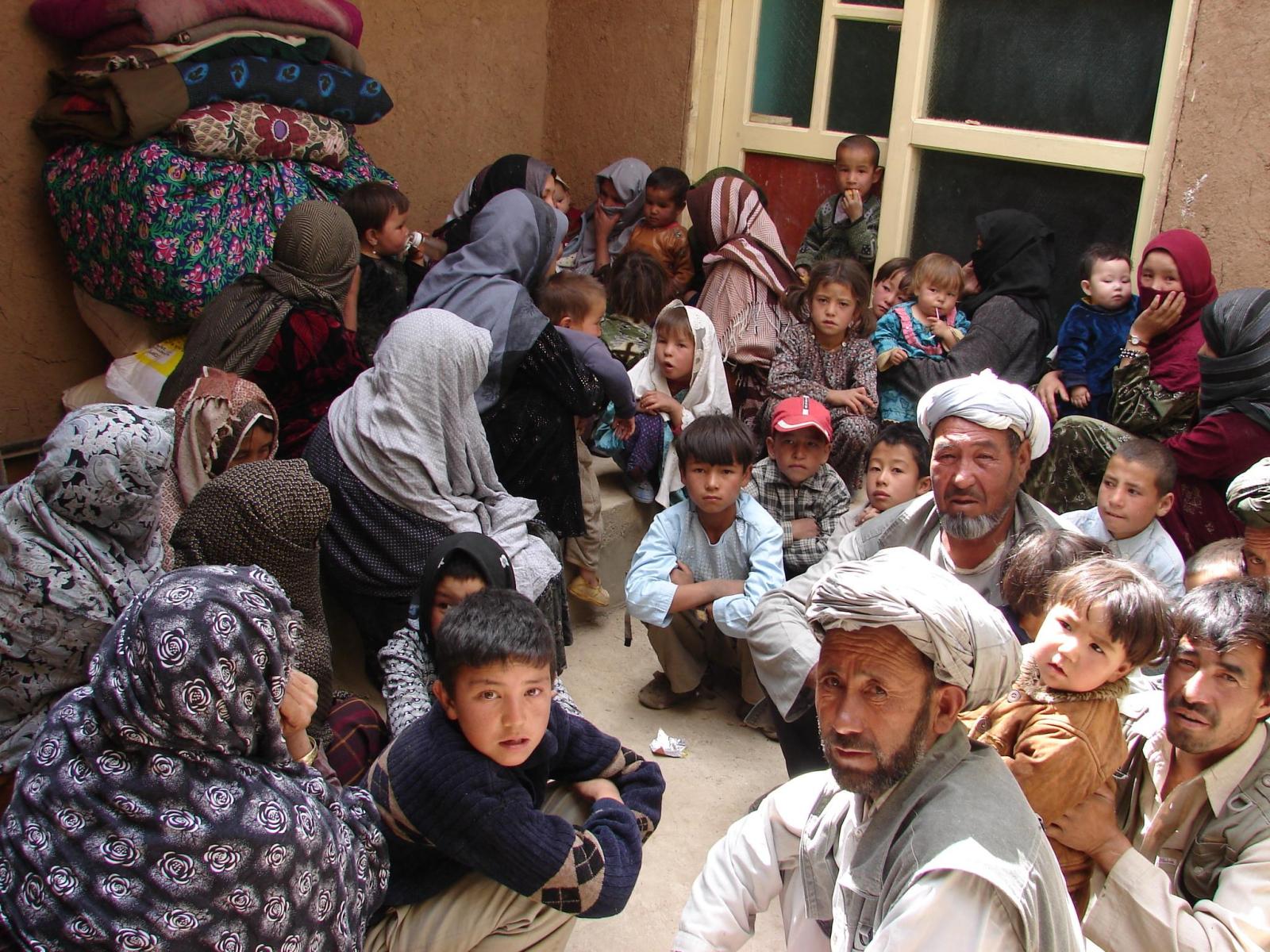
In these recent fierce attacks, thousands of innocent local people are forced to displace, many are killed including women and children and their houses are burnt under the fires of Nomad Taliban weapons.

Also considered as genocide the purpose of this systematic and well organized series of attacks is to shift the war from southern part of the country to the peaceful Hazara provinces and to block the progression of the Hazara Society that are the most oppressed and discriminated ethnic of Afghanistan through the history of this country.

The Kochis (Nomad Taliban), being armed with heavy weapons, come with vehicles and destroy the agricultural lands of the Hazaras, burn their houses and kill them, if capture them.

For the first time, being massacred by the Tyrant King Abdul Rahman Khan in 1890s, then for the second time by the Taliban in the 1990s, lately known as the most democrat and progressive people in different social and civic arenas, the Hazaras are under the pressures of the fundamentalists and fanatic Taliban who are imposing wars against them.

The Taliban know the fact that the Hazaras, as their opponents, play the role of the strongest wall against fundamentalism and terrorism in contemporary Afghanistan.

They in order to enter the political ground of the country, first have to break through this wall and then achieve their goals.

The racist government of Karzai, however, is giving gavels to the Taliban based on its racist and ethnic policies unfortunately, not only not reacting against the Taliban but welcoming them warmly in the political arenas of the country which is not acceptable for the Hazaras who have been victimized by the Taliban.

During these three weeks of imposed war against peaceful Hazara districts and provinces, the corrupted-racist government of Karzai and its international ally states, the special UN representative, NATO and ISAF officials in Afghanistan are all mysteriously silent without showing any reactions, watching this massacre as an entertaining show.

The Hazaras value the importance of democracy and peace process in their country, although it is fragile and symbolic.

Based on these values, they had put their guns down after the war, to begin the new era alongside with the international community to rebuild their war torn country but what they have been facing so far by the racist government, is the opposite of what they really deserved.

Considering the previous years, the Hazaras played a significant role on legitimacy of the elections in Afghanistan by a remarkable presence and men and women in different cities and provinces.

This year again, as the parliamentary election is approaching in Afghanistan in the coming months, the fanatic fundamentalists do not tolerate remarkable presence of the Hazaras that legitimate the elections, therefore they have attacked the Hazaras' areas supporting Kochi Nomads, using violence.

Since 2002, the Hazaras have been a peace supporting society in Afghanistan, moving rapidly toward education in different levels.

The Hazaras have supported the democratization process of the country so far, by playing a major role in national presidential and parliamentary elections and peace process exercises.

They have always been a supportive society to the government in spite of facing ethnic discrimination, bias and mistreatment.

The Hazaras value the Human rights and freedoms of thoughts, speech and expression.

The Hazaras value the women's rights; the first woman minister in the history of Afghanistan, the first woman governor and the first ever woman mayor in the history of Afghanistan are all the Hazara women.

The Hazara farmers cultivate wheat and other useful grains instead of opium that feed and enrich the terrorism and ignite the fire of war of terrorism in the country.

The Hazaras are against any kind of terrorism and fundamentalism in their country and condemn all kinds of terror and attacks.

The Hazaras want peace, security, equality and social justice based on which every one would live brotherly, equally and peacefully throughout the country.

For all these aforementioned reasons they are always threatened and victimized by the extremists and fanatic fundamentalists.


Through this peaceful demonstration in Milan City, the Hazara Afghans in Italy are to condemn any kind of violence, crimes against humanity, forced displacements and genocide that took place in Behsud, Daimirdad and Nahur districts.

We also would like to urge the Italian government and European officials to take for consideration not to continue supporting a government that conduct genocide and crimes against humanity, on its citizens.

Although neglect of Behsud Genocide by International Media is a matter to be regretful for, but

we will continue our peaceful, legal protests until our voices are heard by the International Community while warning the International Community to break its silence and intervene to solve this problem, securing the safety of the Afghan local citizens as for the mandate of their peace keeping mission in Afghanistan, otherwise the Hazaras in Afghanistan are to take guns to defend themselves, this way, the relatively peace brought to the country would again break and the consequence of such war will be unpredictable.


Time and date of gathering: Sunday, June 6th 2010 from h.15:00 - 18:00

Place of gathering: Piazza Duca D’Aosta, Stazione Centrale- Milano – Italia


Duca D’Aosta Square, Central Station Milan- Italy


Hazaras' Demonstrations against Kochi Taliban attacks of Behsud, in Sweden

Hazaras' Demonstrations against Kochi Taliban attacks of Behsud, in Norway


Hazaras' Demonstrations in Australia 1 against Kochi Taliban attacks of Behsud


Hazaras's Demonstrations in Australia 2 against Kochi Taliban attacks of Behsud

Hazaras's Demonstrations in Australia 3 against Kochi Taliban attacks of Behsud

Hazaras' Demonstrations in the UK against Kochi Taliban attacks of Behsud

Hazaras' Demonstrations in Canada against Kochi Taliban attacks of Behsud


Photos of Kochi Nomad Taliban attacks on Behsud


Nomadic life style threatens the lives of the local people


a Hazara child in a destroyed house by the Kochis ( the Nomad Taliban)


Hundreds of houses are destroyed like these ones


Thousands of local people of Behsood and Daimirdad districts are displaced like them


Kochi Taliban are always seen with heavy weapons


A Kochi Taliban with an R.P.G Rocket to fire on Hazaras


Many local villagers are killed like him


Read more about Kochi Nomad Taliban on:

More in this regard in Dari

Fermiamo il genocidio degli Hazara di Afghanistan


Hazaristan Times

Kabul Press dot org

Sunday, July 26, 2009

Hazaras May Play Key Role in Afghan Vote


Hazaras May Play Key Role in Afghan Vote
Long-Oppressed Minority Is Wooed By Karzai, Others

Washington Post Foreign Service
Sunday, July 26, 2009

KABUL, Afghanistan, July 25 -- For generations, Afghanistan's Hazara minority has occupied the humblest niche in the country's complex ethnic mosaic. The political power structure has been dominated by the large southern Pashtun tribes, followed by the slightly less numerous northern Tajiks.
During various periods in history, the Shiite Hazaras have been forced from their lands and slaughtered in bouts of ethnic or religious "cleansing." In more recent times, they have often been relegated to lowly jobs as cart-pullers or domestic servants. The abused boy in the novel and movie "The Kite Runner," which generated much controversy here, came from a family of Hazara servants.
But the group now stands poised to play a decisive role in the Aug. 20 presidential and provincial council elections. It has produced a popular presidential candidate, independent Ramazan Bashardost, who is an extremely long shot but has been traveling the country nonstop, preaching a message of government reform and social justice.
Meanwhile, President Hamid Karzai, an ethnic Pashtun who is seeking reelection, and his major challengers are aggressively courting the Hazara vote. The group makes up as much as 20 percent of the country's electorate and had high voter-registration and turnout rates in the last presidential election, in 2004.
"We have become kingmakers," said Mohammed Mohaqeq, a leader of the main Hazara political party, Wahdat-e-Islami, who agreed to support Karzai in return for pledges that Hazaras would be given control of several ministries and possibly a newly created province. "I cannot get elected, because my Pashtun brothers might not support me, but our people can make a big difference in deciding who wins," he said.
Mohaqeq has been campaigning in various provinces for Karzai, who has remained largely invisible during the run-up to the elections. Mohaqeq's party has organized an army of campaign workers and has fielded a slate of 14 candidates for the upper house of parliament and provincial councils, including one young man whose posters depict an old Hazara cart-puller bent under a load of goods.

Karzai, whose second vice presidential pick is a Hazara, took pains to appease conservative Hazara leaders in March by approving a controversial Shiite family law, even though it outraged human rights groups because it subjected Hazara women to the absolute control of their fathers and husbands.
Yet the political emancipation of Afghanistan's Hazaras, whose children are flocking to universities and office jobs, has created a generational and political split in a community that long fell in lockstep behind ethnic militia or religious leaders such as Mohaqeq as a matter of survival.
Many older or less educated Hazaras still express strong loyalty to such leaders and say they intend to follow their political instructions on voting day. But many others, including students and former refugees who have returned after years in Iran, said they value their political independence.
"I am Hazara, but we have rights now, and no one can tell me how to vote," said Farahmuz, 33, a laborer who joins dozens of men each morning at a traffic circle, hoping to obtain a few hours of work. "I don't want ethnic issues to come up in these elections, because they can destroy the country again," he said.


Many Hazaras said their sentimental favorite for president is Bashardost, 44, a reformist legislator and former planning minister whose office is in a tent across the street from parliament. He has been campaigning in much the same style, accepting government-provided planes to reach distant provinces but then mingling with voters in parks and markets.
"I like Mr. Bashardost because he understands our problems," said Jawad, 25, a Kabul resident who grew up in exile in Iran and now supports his elderly parents as a construction worker. "He doesn't campaign in luxury vehicles like the others. He came to Shar-i-Nau Park on foot and sat there in a tent and listened to the people."
Reached on his cellphone Saturday in a noisy market in Khost province, Bashardost said he had discovered "a big distance between the ordinary people and the politicians in Kabul," adding: "I am sure we are going to see a revolution on August 20." He also said he had received a surprisingly large amount of support from Pashtuns at home and abroad. "This is something very new for Afghanistan," he said.
As a minority group that has long faced economic exploitation and social oppression, Hazaras seem to be taking particular advantage of political freedoms that have opened up since the fall of extremist Sunni Taliban rule in late 2001.
At a new private Shiite college in Kabul, teachers and students said the elections are important for their community, no matter who wins, because they represent a step toward modern, democratic practices that can help overcome Afghan traditions of ethnic and tribal competition.
"We need to develop the values and practices of democracy," said Amin Ahmadi, the college director. "Unfortunately, ethnic issues still play a large role in our country, and people don't trust leaders from other ethnic groups. But if we can have fair, transparent and peaceful elections, that will matter more than if we get a good or a bad president."
In West Kabul, the rundown but bustling heart of the capital's Hazara community, every public surface is papered with campaign posters. Yet many cart-pullers, mechanics and other workers said they are fed up with both national and ethnic politics. They said that their community suffers from widespread unemployment and poverty, but that no one in power has done anything to help.
"We are not happy with our government, and we are not happy with our own leaders," said Imam Ali Rahmat, 61, who sells firewood. "To them, we are just made of grime and dust. To us, they are just made of false promises. We need a change and we need new leaders, because we have lost our way."


Wednesday, June 24, 2009

Iranian’s grand gathering in Paris, Maryam Rajavi: The time has come for the government of the people by the people and for the people!


By M. Amin Wahidi


Will there be a "CHANGE" in Iran?!!

As the protests are still increasingly continuing in different Iranian cities, following the mass fraud in presidential election, it is speculated that the protestors are now demanding more than only the annulment of the election result but rather an entire change in the whole system of the current regime.

Many Iranian political groups who have been waiting for rage of the people against the regime to help them sweep the floor for their presence in the practical political stage of the country, are now beginning count down for the fall of the religious regime in Iran.

Mujahedin e Khalq e Iran or People’s Mujahedeen Organization of Iran (PMOI) organized their annual gathering on Saturday June 20 in Villepinte Paris, celebrating the 28th anniversary of creation of National Resistance Council of Iran (NRCI) with the presence of thousands of Iranians from different countries of the world in Paris, to show their support to the residences of Ashraf city the PMOI’s residential – military camp in Iraq.

Maryam Rajavi president elect of the National Resistance Council of Iran and one of the PMOI’s founders gave a speech to the PMOI’s adherents and her supporters while being well received by several European Parliamentarians invited in the gathering.


Although the main occasion of this gathering was the celebration of the 28th anniversary of National Resistance Council of Iran and the support for maintenance of Ashraf city, but the latest post election situation of Iran was more highlighted by Mrs. Rajavi in her speech and she said: “it is the time for the people to have a government by them and for them.”
In this gathering, the European Parliamentarians from the GB, Denmark, Germany, France, Spain and Italy, and a Canadian parliamentarian all spoke on behalf of their parliaments supporting the decision of the European Parliament on removing PMOI from the terrorist list. They emphasized on safety and security insurance of the residents of Ashraf city (PMOI Camp in Iraq), based on international humanitarian and refugee conventions. The Parliamentarians highlighted POMI’s real struggles against Islamic fundamentalism in Iran as far as they had visited the Ashraf City in the recent years.
They all called for the USA to support this decision of the European Parliament and remove them from the terrorist list provided by this country.

In April 24 2009 The European Parliament has signed a resolution considering all security of the lives of residences of Ashraf city, the POMI’s camp in Iraq based on the international humanitarian and refugee conventions.

Mujahedin e Khalq (People’s Mujahedin Organization of Iran)
Mujahedin e Khalq is a well known Iran group, that had military basis in Iraq and political offices in Europe, famous for their resistance against the Iranian strict religious regime, is now entering into the stage with a maneuver of its supporters in Europe through a grand gathering in Paris, since lately the restrictions on this political – military group is being released by the European parliament.

Founded basically in the mid 1960s as a political group by the university students, Mujahedeen has first fought against Mohammad Reza Shah Pahlawi the pro America King of Iran until the collapse of monarchy and the beginning of the Islamic Republic, but they did not have a role in the post monarchy Islamic Republic government after that, instead with a new view of the religion they broke with the conservative revolutionary group opposing them for the Wilaiat e Faqeh system (Religious Monarchy of Ayatullahs).

This group then added a military branch to their political structure since they moved out of Iran and was welcomed by Sadam Hussain in Iraq in the early 1980s when the National Resistance Council of Iran was born. By the support of Saddam Hussain they made an army with thousands of bright minded religious believers, they announced war against any interests of the regime until the collapse of the regime and since then has launched many attacks against the IRI officials and interests through the past 20 years.
In the eight years war of Iraq against Iran, 1981-89 they played a major role supporting Saddam against Iran.
Since the collapse of Saddam Regime in 2003, the Mujahedeen e Khalq was peacefully disarmed by the American forces in Iraq and their residential military camp (Ashraf city) was secured by the Americans until August 2008.

PMOI and the USA
While the Mujahedeen is not yet out of terrorist list of the United States but since the American Forces handed the security operations to the Iraqi forces, the Iraqi officials have warned to close PMOI Camp (Ashraf city) and expel the residents to Iran or elsewhere, when they are in good relations with the IRI regime.

The PMOI leaders since then have made many struggles to convince the world that Ashraf city is not a terrorist camp but a city of resistance against the IRI regime.

Their struggles have been successful in Europe to some extend but as long as they are strong Shiite believers with a tendency towards leftist ideology, they are still recognized as a terrorist group by the USA.


The contemporary Iran and the Iranians
While not yet in Tehran and other major Iranian cities the demonstrations and protested are stopped but have been increased rapidly, millions of Iranians around the world are awaiting fundamental changes in the system of the ruling regime in their country.

The latest presidential election that was reported as a mass fraud election in the history of Iran has opened a new page in the contemporary history of Iran.

As the evidences show the protests of the people have reached its acme and seem to result a revolution that could end to collapse the current regime, as say by the observers, the late resent protests of the people within and out of Iran against the result of presidential election, is indeed the need and thirst of the Iranian people for a fundamental change and reform in the whole governmental system that is now called by the people a religious monarchy rather than an Islamic republic.


Follow Voice of Criticism for socio- political updates in Afghanistan

Follow Kabul Press for the latest analysis and reports about Afghanistan and the region

Visit Deedenow Cinema for the updates on Afghan Arts and Cinema

The Behsud Conflicts in Afghanistan: A Blueprint to Avoid Further Clashes in 2009 and Beyond


By Lenard MILICH


June, 2009


Not only severely hampered by weak government and judicial branches, a barely nascent civil society, and the Taliban insurrection, Afghanistan now also faces inter-tribal skirmishes in its formerly peaceful (and pro-government) Central Highlands, where transhumant pastoralists known by the term "Kuchi," the vast majority of whom are ethnically Pashtun and Sunni, bring their flocks each summer for highland grazing in the homeland of the Shi'a Hazara. The great danger of these armed clashes, which have left a few score people dead on both sides, Hazara houses burned, and last year generated some 60,000 internally displaced persons (IDPs), is that both sides are exhibiting an intransigence that bodes ill for the future. The Hazara have been among the most pro-government of Afghanistan's tribes, and have willingly acceded to the drive for disarmament. They feel betrayed by government inaction, and are preparing themselves for escalating the conflict with the Kuchi as necessary this summer. That perhaps one-quarter of the capital's residents are Hazara threatens to bring Kabul to a standstill, as occurred last summer for one day when an estimated 50,000 Hazara demonstrated in the city center.
At first sight, the Kuchi-Hazara conflict seems to be a quintessential struggle over access to ecological resources - that is, summer grazing. As with so many aspects of Afghanistan, competition over grazing is only the surface veneer. The roots of the conflict go back much further. Nor can the conflict be separated from the very real, but never acknowledged, issue of burgeoning population, coupled with a relatively slow rural-urban migration. Most of Afghanistan's population remains rural - an estimated 80%. Were the country endowed with superior soil and water attributes, this would not necessarily be a contentious issue. But it is not - just 5.5% of the land area consists of irrigated land. As a result, sedentary farming populations subdividing irrigated plots over generations has forced the rural populace into attempting rainfed agriculture on the surrounding hill slopes whenever the residual soil water content from winter snows and spring rainfall permit, which has been infrequent over the past decade in many parts of the country. It is this agrarian expansion that impinges on the use rights of Kuchi pastoralists, fomenting conflict as crops are damaged and grazing areas reduced in size. In turn, the Kuchi believe that all descendents of the families granted grazing rights are entitled to bring their livestock to the summer grazing grounds.

The potential for conflict driven by competition over scarce natural resources cannot be downplayed anywhere in the country. Population data are highly unreliable; there has never been a national census, and the probability of one being held anytime in the next few years is near zero. Estimates from different sources project the country to be home to between 23 and 32 million people. Central Statistical Office population statistics are therefore sheer guesswork, but one number does deserve attention: between 2003 and 2004, CSO figures suggest the population to have increased by 4.4%. Most refugee returnees went home the previous year, and the 700,000 Afghans deported from Iran arrived in later years. Hence, the 4.4% may be CSO's best guess for natural population growth. What is immensely alarming about this figure is that it predicts population doubling in 16.5 years. If in the ballpark, then such growth rates demand a paradigm shift in the business-as-usual development scenarios being constructed by the government and donor partners.

Lastly, casual observers of Afghanistan's history might conclude that the country's monarchy ended with Zahir Shah's abdication in 1973 or perhaps with his death in 2007. They would be wrong because ethnicity was, is, and for the foreseeable future will continue to be, King. And as with any monarch more than merely a constitutional figurehead, viziers vie for influence through political manipulation and intrigue. The swirl of Afghan history of the past 120 years underlie the Behsud conflicts, and it is these manipulative intrigues, summed over this period, that make this particular conflict - and by extension, most Kuchi-Hazara contests over land - intractable to community-based dispute resolution mechanisms.

This paper reports on the themes and details covered by a series of key informant interviews conducted by staff of the Afghanistan Research and Evaluation Unit in late 2008 and early 2009 among prominent and ordinary Kuchis and Hazaras, as well as high-placed Afghan civil servants, international and national staff of UN agencies, and involved NGOs. The regrettable imperative to protect informants' identities means that no individuals can be identified in this report. Furthermore, while throughout these interviews triangulation or confirmation of information freely provided was a priority, a final effort to separate fact from fictional rumor cannot be accomplished. But in the author's view, such separation is, ultimately, unnecessary, because what drives the Behsud conflict is a very strong feeling of righteousness on both sides, rather than cool analysis on anyone's part - except perhaps those of the "King's viziers."

To reiterate, it is incumbent on readers of this document to exercise appropriate judgment with respect to the background section. For example, allegations of severe bias on the part of an organ of the Afghan state may not be substantiated under independent external review; nonetheless, this does not detract from the fact that an involved party strongly perceives that a bias exists, which then affects its subsequent belief systems, responses, and future behaviors.

Background: Elements of the Conflict
Afghanistan, as is well known, has suffered through repeated cycles of violence and warfare for more than two millenia. The current Behsud conflict can be traced back to Royal policy of the late 19th century. Abdur Rahman Khan, Emir of Afghanistan between 1880 and 1901, is justifiably known by the appellation "The Iron Emir," for he crushed, not only suppressed, any attempt to question his authority. In 1892, Abdur Rahman put an end to the Hazara insurrection, which had started in the late 1880s. To assist with the pacification of Hazarajat, Abdur Rahman dispatched Sunni clerics to the area, in an attempt to rid it of Shi'ism; he instituted burdensome taxation on the Hazaras; and his divide-and-rule policies abetted the sale of Hazara men and women into de facto slavery - a situation formally ended by a declaration of the illegality of slavery in 1923. To justify his actions, he is said to have gathered Sunni mullahs in Kandahar, after which they declared the Hazara to be kaffir, i.e., infidels. To gain political control over the fractious Hazara, the Iron Emir commenced the "Afghanization" of Hazarajat, encouraging the settling of the land and use of its pastures by Pashtu speakers, notably from the Ghilzai tribe. His local administrators issued firmans (royal decrees) that formalized access rights of Pashtun Kuchis to summer pasture land. Within these firmans, boundaries were delineated, and individual families having these access rights were listed.
Examples of firmans and two pages from Volume 3 of Seraj-al Tawarikh by Faiz Mohammad Kateb that discusses deeded Pashtun lands in Hazarajat.

The Kuchis contend that their transhumance has been occurring for 300 or more years, and that the firmans merely formalize their activities. They believe that the firmans grant the right to all descendants of the original families list to use the pastures, and claim that these pastures' boundaries are being violated by Hazara encroachment, both for rainfed agriculture and for grazing.

While these firmans were imposed from top-down on the Hazara population, for many decades thereafter, there was little in the way of resistance to Kuchi entry to summer grazing lands. Demoralized and marginalized, the Hazara chose in the main to accept the status quo, while many focused on education and/or migration as a means to a better life. Moreover, Kuchi pastoralists were often the sole source of contact for geographically and socially isolated households in the Central Highlands, arriving each summer with goods to sell or trade, albeit often the terms of trade were unfairly skewed in their favor. The inability of the Hazara to repay Kuchi loans not infrequently resulted in additional land coming under Kuchi ownership.
Kuchi transhumance into Hazarajat slowed or stopped entirely during the civil war, and many Kuchi sedenterized. Because of this vacuum, in some places local Hazara used Kuchi pasture land for rainfed agriculture, and sometimes stopped paying rent to Kuchi landowners. Livestock numbers fluctuated: in 1976, there were nationwide perhaps 23.3 million small ruminants (sheep and goats), rising (according to UN-FAO estimates) in 1995 at the beginning of the Taliban period to around 31 million, then falling to <20>

Concomitantly, the common themes among the Hazaras interviewed are that the firmans are illegitimate, having been issued in an era of despotism; that the Kuchi "are not the original Kuchi" - meaning that there are both non-Kuchis embedded in the incoming groups (this accusation is primarily focused on the belief that the Kuchi have been accused in the past of supporting the Taliban) as well as many non-Kuchi animals that are being collected for pasturing in Hazarajat; and that in any case, population growth among the Hazara has increased the demand on arable land, grazing, and water resources such that there is no longer the carrying capacity to supply food and water to both groups and their animals. In other words, Kuchi transhumance is perceived as adversely affecting the Hazara's right to a decent and secure livelihood, and this is exacerbated by the view that Pashtun Kuchis (as opposed to Arab Kuchis, who pay a head tax per animal for summer pastures in Yawkawlang) act with impunity, not taking sufficient measures to prevent damage to Hazara crops by their animals. There is, it appears, a growing sentiment in Hazarajat - at least among the educated classes as well as traditional and political leaders - that Kuchi transhumance will no longer be tolerated. Conversely, many Hazara state that Kuchi landowners are welcome in Hazarajat, but many also add the proviso that they should reside there year-round.

Most Hazara informants believe that as far as Behsud is concerned, both the Afghan National Army (ANA) and the government-appointed Sabaoun Commission (tasked with investigating the conflict) are biased in favor of the Kuchis. On the other hand, several praised the work of the Afghan National Police (ANP), pointing out that not only did the police protect individuals but also in areas under their control, they maintained cultivated land and livestock left behind by IDPs.

Information provided by national staff working for the United Nations is that Hazaras now contend that the current Pashtun-dominated government has always favored the Kuchis; the government's credibility is at rock-bottom in Hazarajat. The Hazara people have abandoned hope that the government is benevolent, and are taking steps to defend themselves. One Agency has heard of "commitments" from individual businessmen "abroad" (i.e., outside of Hazarajat) to help in this defense. Another marker of escalation is that many Hazara communities have continued to pay rent to their Kuchi landlords, and now some agitation is commencing to persuade people to stop these payments. There is an allegation that a "land tax" is being imposed to gather the financial resources to buy weapons and pay for militias. These are early signs that a conflict that breaks out in Behsud this year could rapidly spread across the Central Highlands, but not necessarily stop there, as connoted by the large Hazara demonstration in Kabul last year against the killings in Behsud.

Given such divergent views between Kuchis and Hazara, it is difficult to conceive of a reconciliation between the parties being plausible at present; in fact, because of heightened tensions, conversation itself may be impossible. The dispute can only be resolved by an essentially political decision. And this, therefore, is the paradox of Behsud, and by extension, other Kuchi-Hazara conflicts: Conflict prevention this year is purely a political decision, while simultaneous stringent depoliticization is required to defuse the underlying tensions that are likely to result in a flare-up of the conflict this or subsequent summers - a situation that could then easily spread to other areas in the Central Highlands as well as erupt in Kabul itself. Once a level of depoliticization is reached, the people who actually have ties to the land are more likely to be able to sit together and come to an agreement. For the interim, however, the recommendations below, if implemented, could extinguish the spark that could erupt into armed clashes this summer, and subsequently build a base for a final resolution in the near future.

A Glance at the Afghan Legal Environment
Article 14 of the 2004 Constitution stipulates that the State "shall design and implement... effective programs for the... settlement and living conditions of the nomads." It is this statement regarding "settlement" -inserted by a prominent Kuchi leader - that offers a realizable, albeit not immediate, resolution to the conflict between transhumant herders and sedentary farmers. The Draft Land Policy (English), dated 1385, offers broad guidance as to how this can happen. Section 3.1.8 opines that "...any approach to sustainable dispute resolution must address the historical and underlying grievances associated with how land was acquired whether by government..." - that is, it suggests that land- or usufruct-granting firmans issued during Abdur Rahman's reign can be analyzed for legitimacy under terms defined by today's more open, democratic society. How should this be carried forward? Section 2.2.6 informs us that "It is national policy that the resolution to complex issues of ownership and access rights to pasture lands be examined at the provincial level and traditional use rights of settled farmers and pastoralists established and respected." Realistically, provincial-level determinations will be untenable given the animosity felt by Hazaras toward Kuchis, hence other solutions acceptable to both parties must be implemented. Finally, land can be allocated to settle Kuchi families, as stipulated by Section 3.1.1 of the Draft Policy: "It is national policy that land distribution schemes for productive and economic activities be balanced to evenly serve the competing interest of all segments of society." The Civil Law of the Republic of Afghanistan (1975), Article 483, allows for reallocation of public lands to private use: Public property shall be deemed non-public when the period of its use in the public interest expires. These indicative mechanisms would need to be fleshed out by legal experts within the Ministry of Justice.

Many of the recommendations below are predicated upon the issuing of a Presidential firman. Under Article 79 of the Constitution, the President may issue a firman (one unrelated to financial or budgetary affairs) if the Wolesi Jirga (the Lower House of Parliament) is in recess and the situation is deemed to be an emergency. The next parliamentary recess is scheduled to begin on 15 Jawza 1388 (5 June 2009). The firman could be valid for at least 10 weeks; Article 79 stipulates that such a firman must be submitted to the National Assembly (i.e., both Houses of the Parliament) no later than 30 days after it reconvenes (recesses are of 6 weeks duration.) The firman can be based on enforcing the Law on Firearms, Equipments and Explosive Materials (Issue #855 of the Official Gazette, dates 21 June 2005), which states that anyone other than the ANA, ANP, or NDS (the intelligence service) must be licensed to carry a weapon. Article 134 of the Constitution specifies that it is the duty of the ANP to enforce the law, and the Attorney's Office to prosecute violators.

Suggestions for an Integrated Strategy to Defuse the Potential for Conflict in 2009 and Beyond
Because the chances of getting an ethnically divided and fractious Parliament to agree on legislation addressing the conflict is, in reality, impossible in the time remaining before the Kuchi are set to arrive in Behsud in May, there is only one legal avenue available: The President must issue a firman: he must state very clearly that no resumption of hostilities will be tolerated, and that the full power of the State will be brought to bear on either side should armed conflict be instigated. Karzai is allowed by the constitution to do so once the parliamentary session ends, and the firman remains valid until 30 days after parliament reconvenes without need for parliamentary endorsement.

This firman must allow the Kuchi access to Behsud through clearly delineated corridors, around which there should be a buffer zone of 500 meters on either side where no weapons can be visibly carried by either Kuchi or Hazara, as per the Law on Firearms, Equipments, and Explosive Materials (dated 21 June 2005). This firman should clarify that violators of the Law and this prohibition on visible weapons are subject to immediate arrest by any of the three branches of the Police (criminal, civil order, and justice).
The firman must specify payment of a "head tax" on every Kuchi animal that transits the Behsud area and the defile of the Jalriz Valley, with money being paid to the District Commissioner (woloswali) or other trusted recipient for subsequent equitable distribution to local communities. Concomitantly, the firman should remind the Hazara that any land deeded as "owned" by the Kuchi should be accessible to the owners at any time, in accordance with Article 40 of the Constitution.

These, however, are only temporary solutions, and do not address the natural resource issues. This can be achieved only through a broad set of initiatives. Following stabilization of the Government as an outcome of the August election, the President should convene a Distinguished Panel consisting of Ministers, legal and technical experts, and traditional representatives (including renowned figures in Shariat and customary law) to decide what is to be done with the firmans granting pastoral use rights (usufruct) during Abdur Rahman's reign. This strategy could be predicated on Article 162 of the Constitution, which states that decrees (firmans) contrary to the provisions of the Constitution (i.e., Article 14, which stipulates Kuchi settlement) are rendered invalid. One possibility could be consideration of the term "unjust" or "just," rather than "illegal" or "legal" to avoid any subsequent compensation claims, as implemented in Spain's recent examination of Franco-era policies.

Since the contribution of the Kuchi to Afghanistan's economy remains poorly understood, the Ministry of Agriculture, Irrigation, and Livestock (MAIL), together with the Ministry of Tribal Affairs / Department of Kuchi Affairs, should undertake an assessment of the magnitude of the Kuchi's input, both for food security (particularly for urban areas) and provision of livelihoods (through secondary products including fibers, pelts, and skins). Results should drive future policies. One example is that for those Kuchis continuing a traditional lifestyle, integration of methods pioneered by the Pastoral Engagement, Adaptation, and Capacity Enhancement (PEACE) Project (http://www.afghanpeace.org/) could inform them where they can go to find optimal summer pastures. For those Kuchis choosing to remain in winter locations over the summer, para-vets or other extension experts can provide advice on the management and housing of animals. None of this needs be carried out in isolation, for Afghanistan can learn from Iran's set of experience with transhumant pastoralists (locally managed agreements, legislative actions, enforcement methods, etc.).

Lenard Milich earned his PhD in Arid Lands Resource Sciences in 1997; he subsequently served with the UN World Food Programme in Asia and Africa as a vulnerability analyst, founded Africa Biofuel and Emission Reduction Company in Tanzania, and was senior research manager for natural resources at the Afghanistan Research and Evaluation Unit when investigating the Behsud conflict. He may be contacted at lenmilich@unforgettable.com

To see the Source click: The EurasiaCritic.com


Read More about the violence against The Hazaras

The Drum of Democracy is played once again this year!

A day and half in Rome

The Afghans in Italy; Stop genocide in Afghanistan!

Afshar massacre a sear on the hearts of thousands

See CBC TV report on the Hazaras of Afghanistan

The Hazaras abandon the ANA (Afghan National Army)

Will Bashardost be an Obama for Afghanistan?!!

When will another Mazari be born?

Let Obama know about the Pashtoon Racism in Afghanistan

Exclusive Pictures of Kabul Protest Against Kuchi Invasion of Behsud

Policing Afghanistan

A review of "The Kite Runner" movie


Follow Kabul Press for the latest analysis and reports on Afghanistan and the important regional issues

Visit Deedenow Cinema for the updates on Afghan Cinema and Arts