a caricature by M. Amin Wahidi


As a refugee resident in this country, I do not yet have the right to vote, nor in the parliamentary neither in municipal elections, as the citizens do. And therefore so far I was not sensitive to the recent municipal election results until I saw some provocative electoral posters by Lega Nord and PDL on the walls in Milan these days. Seeing these posters, I was encouraged to write a few lines on the issue “frighten them to govern on them.” The results in the first round of voting which took place in 16 and 17 May, showed how Berlusconi and his candidate for municipality of Milan, Letizia Moratti were on the edge by an unexpected vote result. The result was a shock for all their allies including the most radical new-fascist party, Lega Nord. Letizia Moratti supported by center-right parties such as PDL, and the radical racist parties such as Lega Nord got 41% of the votes while her rival Giuliano Pisapia supported by center-left parties such as PD, Sinistra Ecologica Liberta etc, received 48, 4 % of the votes. Letizia Moratti in the elections in 2006 had won 52% of the votes against her centre-left coalition candidate Bruno Ferrante who had 47 % of the votes.
This year’s first round result showed a great deal of people’s tendency to the leftist political parties in the recent years.
One of the reasons for Moratti’s loss may have been her negative approaches in her campaign; defaming her rival candidate Pisapia without any proves against him and then using the mottos that do not have anymore effects in the electoral campaign market. But in contrary having the support of many leftist parties, Giuliano Pisapia, the clever rival for Moratti in this election, did not defame his rival, instead he had presented his own alternative plans and programs for Milan through different gatherings.
Even though, if Pisapia wanted to use the defamation policy against his rival candidate and her party, there would already be many proves against Berlusconi, the on going cases against him in Milan Court would be enough material, but for Pisapia, it was more useful to be firm and steady on his position and suffice to presentation of his own programs. He instead had offered alternatives for the betterment of Milan especially in the period when Milan is getting prepared to host The World Expo 2015.
The other thing that helped him get more votes than Moratti was accompaniment of many famous artists, writers and singers in his electoral campaign.
In this election, Moratti’s weakness was relying on PDL and Lega Nord misleading policy of “Frighten them to rule on them” which showed they did not have any interesting and useful plans for the city to present to the citizens.
Moratti’s team instead of presenting their clear programs on what she will do for betterment of Milan if she wins the election; she relied on frightening the citizens with the issues such as immigration, the mosques, nomad camps etc.
They tried to show the people, the negative consequences of a center left mayor in the office but they seemed to be failed in their struggle.
They claimed if the centre-left coalition wins in this election, they will make mosques for the Muslims in the city, they will let more Roma Nomads in the city and they will give more opportunities to the foreign immigrants rather than the citizens.
Through a multi-million euro electoral campaign, Letizia Moratti had already prepared herself to win the election and stay in her current position, mayor of Milan but things did not go as she expected.
Her first weakness was the contradictions from one to the other of her electoral posters; in one she put the photos of different faces and different colors and said Milan would give equal opportunities to everyone, and then in another one she frightened the citizens from foreign immigrants.
This policy “using foreign immigrants as frightening puppets” which may have been useful a few years back, now seem to be expired and out of use. It is now some years that the People in Milan already live with the foreign immigrants and as time pass they get to know them better, so no need to have fear from them, it is what the foreign immigrants have proved so far. And obviously they have contributed to the multi-ethnicity and economic development of Milan, most Italian citizens in Milan admit it.
Seeing the baffle in Moratti’s electoral team after their defeat, they look like people drowning into a deep see who try to grab anything first comes in the hands just to rescue themselves and survive.
Moratti’s main supporter, 75 years-old Mr. Berlusconi based on many cases against him in Milan Court, is still accused of corruption, sexual affair with minors and misusing his media empire for his favor and that is why he does not seem to have the popularity anymore in Italy. So far there have been many demonstrations against him in different cities of Italy and millions of people have named a day as No Berlusconi Day in their calendar 5th December 2009. After his disrepute for his sexual affairs with several beautiful young women including a minor girl, the women in Italy who make half of the voter population see him as a shameful figure who has insulted the feminine gender in this country. For them he is rather a playboy man than a political leader of the country.
Many famous Italian intellectual and writers have stated that Berlusconi has become a symbol of shame for their country. They think, Berlusconi has lowered the dignity of Italy which was once famous for its bright history, art and science. They have said; Berlusconi can not represent the Italian values.
Milan as the economic capital of Italy has a special importance for old Mr. Berlusconi, it is his birth place, and a great number of his supporters live in this city, therefore Municipality of Milano seems to be the last resistance front for him and his party PDL, thus he might do anything for Moratti to win in this election, even if through fraud and falsity, otherwise considering his trembling position in the government, losing in Milan will definitely weaken his political position more than before and his failure in the politics may affect his cases in the court and may cause his failure in his private business as well. Giuliano Pisapia may or may not win in Milan, but his candidature and people’s ovation for him showed that despite Berlusconi’s media empire propaganda, people judge the candidates and their parties based on what they see from them and experience practically in their daily lives, not through what Mediaset feed them on daily basis.
If Pisapia wins, people should not expect many great changes in overnight, he may only plant the seeds of some changes for the years ahead but the important thing is people’s awakening and their determination for such great changes in their city and in the country. The time has come for it now.


By Nima Idihaw
Spring comes with greenery which should naturally bring hope and happiness for the creatures, but it is different at least for the Hazaras of Behsood District. In the last days of winter people in Behsood begin to feel fear for the coming season; spring.
Passing a long cold winter behind, people wish to begin the New Year with new plans but the Kochis arrival in the area changes all their plans. The greenery becomes sign of bloodshed for them and hopes turns into disappointment.
Being a Hazara and living in Behsood you get confused; is spring naturally disastrous or the Kochi nomads are the cause for the disasters?
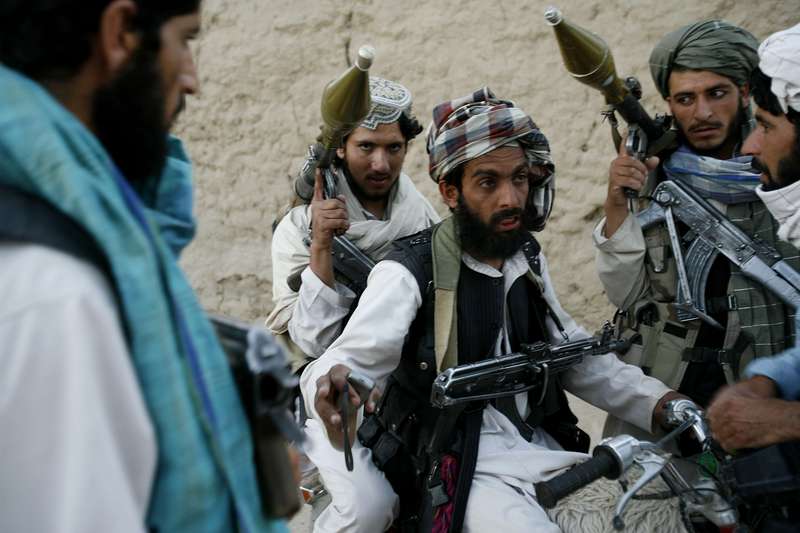
Every year in the spring, Kochi nomads armed with weapons arrive from the southern and eastern provinces to Hazarajaat, or the Hazaras’ Lands. Some of them even come from beyond he borders, from North West and South West Pakistan and use the farms and pastures of the Hazarajaat in central Afghanistan for their livestock. When the local inhabitants who are mostly farmers object to Kochi’s destructions, they are responded with heavy weapons and are forced to flee the area.
Attacks and harassments against the Hazaras have a long history. This category of attacks was legitimized by a decree singed by Amir Abdul Rahman Khan, the tyrant king ruling from 1880-1901 in Afghanistan, more than a century back.
Now after more than a century the third and fourth generation of the Kochis still permit themselves to come and use the Hazaras farms as pastures for their animals, based on that decree.
During his war against the Hazaras (1885-1895) who had their own popular local governments, the tyrant king massacred more than 60% percent of the Hazara population and forced many thousands to flee to the neighboring countries, as the historians say.
The king in order to obtain the support of eastern and southern Pashtoon tribes who were famous for savagery, let them kill the Hazaras and loot their belongings freely, he then legitimized it by a decree to encourage them more.
Many of the surviving Hazaras remained slaves for a couple of decades thereafter.
Abdul Rahman Khan died and Hazaras’ slavery remained legitimate until his grandson the reformist king Amanullah Khan removed that status by a decree through a Loya Jirga in 1923.
By annulment of that decree even though a historical change took place for the Hazaras but the attacks against them and their properties remained for long.
The Hazaras were safe from Kochi attacks only for a decade during the pro-communist regime in Kabul (1980-1990) that promoted social equality and relatively supported the poor. During the Taliban Regime, the attacks reached its hot point when the Kochis had the full logistic and moral support of the Taliban. In this period, they joined the Taliban frontlines and were free to use the lands of non- Pashtoon ethnics throughout Afghanistan. They used the farms as the pastures for their livestock in the Central Highlands. In the post- Taliban era, after the new government was formed, the Hazaras’ resistance forces put down their guns and opened their doors for democracy to receive at least equal treatments as all other ethnics in the country, but as they opened shoulders to embrace democracy, they were not only being targeted by the fundamentalists but also they are being discriminated by the central government in different ways.
The report and evidence show that there are officials in Karzai government who continuously and generously support and fund the Kochis to attack the Hazaras annually.
It happens for at least two or three clear reasons as the analyst speculate. The first reason is to transfer the load of war from the south and east provinces where the major population is ethnic Pashtoon to the Central Highlands where most of the inhabitants are the Hazaras.
The second reason is to obtain the consent of the Pashtoon tribes who think to be victimized in the war against terror. The lands of the Hazaras seem to be a cheap incentive to compensate their rebellion against the government. And the third reason is involving the Hazaras in a war to stop their efforts for a federal government in Afghanistan. The Hazaras have many times showed interest in federal government in Afghanistan where every ethnic would have independence in their regions through a positive competition.
In spite of being historical victims of massacres in Afghanistan, the peaceful nature of the Hazaras inhibit them carrying weapons to defend themselves against terrorism as they rely on national security forces. They are tolerant and believe in peaceful transformation of a society through long term civic changes in the country thus they deny picking up guns and begin to fight. On the other hand in a country where savagery is an ordinary behavior, their existence is threatened to be eliminated and they are put in a crossroad of how to react with these fatal threats.
Respecting the rule of law in the country, the Hazaras did not pick up guns for their lawful demands and basic rights, but they have repeatedly urged the attention of Afghan Security forces and NATO that are the responsible bodies for the security in the country, but non have been helpful to them so far.
Will spring turn to be a good season for them again, nobody knows.
See also
Kochis well-armed to kill more Hazaras
Trilogy of Life by a Hazara child in Behsood
Photo reportage: Demonstration in Italy against Kochi attacks on Behsood

By Nima Idihaw
Beyond the borders of Afghanistan in the south and east, on the other side in Pakistan, the inhabitants are from ethnic Pashtun tribes and as a result of ethnic solidarity the border between Afghanistan and Pakistan is freezone for ethnic Pashtuns to smuggle weapons, people, and opium with impunity. They can also move freely across the border of both countries when they want and settle freely. The openness of the border helps the tribes of the ethnic Pashtun and promotes electoral fraud, the import and export of fundamentalists and terrorists and weapons and drugs to either country as an ongoing free trade. In this case the majority of the Pashtuns in the southern and eastern provinces have two national identity cards; an Afghan one and a Pakistani one, thus they can easily vote on both sides of the border and can effect the balance of power through electoral fraud in their favor. Having two national identity cards is one of the reasons that make the southern and eastern Pashtuns disloyal to Afghanistan, as many members of the other ethnic groups within Afghanistan rightly claim.
In spite of central government’s enormous fiscal allocations to the southern and eastern provinces, the outcomes have always been negligent. For example, the bias against provinces like Daikundi and Bamyan, (populated by Hazara peoples) means when the Karzai government allocates enormous financial support for the building of schools and hospitals in the southern and eastern provinces the extremists burn and destroy them, a complete waste of foreign aid on these provinces where a large number of fundamentalists exist. Instead, in other provinces where the people demand schools they are not allocated funds for they are not Pashtuns.
It does not mean these provinces should not receive reconstruction funds, but the inefficient way of dispersing funding to these provinces is a waste of time, energy and money. The government does not have civil education and literacy programs for these areas that could help change their mentality and lifestyle. Their mentality can only be changed through the positive promotion of successful role models in other provinces where the level of literacy is high. Unless the level of education grows in these provinces, any kind of investment can be considered futile.
The Karzai regime however, deliberately promotes the ideology of “Talibanism” among the people in general. Releasing Taliban war criminals from prisons, giving privileges to Taliban commanders are the incentives that encourage ordinary poor people to become part of the Taliban system itself.
As far as an entirely illiterate generation that does not know anything except killing, war and violence, this situation puts the entire country in a state of paucity, this sector of the community needs a long-term program to get accustomed to civilian life, not wartime, but the government has never had a long term program for them, instead it has used them in order to create chaos and uncertainty.The motive behind this strategy is to keep chaos and insecurity within the country in which a small group of people would have power in the form of ethnic sovreignty and govern the entire nation.
Evidence shows that the strength of tribalism and its inherent values has a direct link with the growth of terrorism in Afghanistan and since the Karzai regime has announced reconciliation with the Taliban based on Karzai’s own (Pashtun) tribal values opposition voices can rightly claim he has sacrificed the nation for his own tribal values. Karzai’s laws are based on “Pashtounwale” (Pashtun tribal law) and he has called them his “brothers”.
Political commentators say taking a weak position against the Taliban has weakened the pillars of the central government in Afghanistan; instead it has strengthened the position of the Taliban in that their unacceptable demands have worsened the security situation ever since this position was adopted.
Members of the Taliban who have not accepted demands from Karzai and his international allies do not yet have a clear idea of what it is they want exactly and what they will do if they will be given a voice in the government. This all began when the victims of the Taliban’s tyrannical rule during the late 1990s did not accept their return to power, indeed those victims want them to be prosecuted for the crimes they committed against humanity ; massacres and atrocities against the Afghan people themselves.
Like many other Pashtun rulers before him, Hamid Karzai does the same; he creates a division between the ethnic groups of Afghanistan by supporting the Pashtun fundamentalists as a kind of weapon and leverage for his own political aims. People say Karzai deliberately keeps the Pashtuns illiterate in order to win their obedience. That he intends to keep Pashtun fundamentalists as allies and use them as a trump card in the bigger game with the Western powers, but what has happened instead is the growth of enmity and ethnic clashes among the ethnic groups of Afghanistan. The Pashtun intellectuals abroad have noted this fact with due regard.
The libido of fundamentalism relies on chaos and disorder, when there is no chaos and disorder no fundamentalism can exist. This has been proved throughout time. When there is light, clarity and education there are less people to listen to the fundamentalists’ voice and the phenomena of fundamentalism disappears automatically.
Throughout the history of Pashtun rulers they have tried to paint a negative image of the other ethnic groups in comparison to the Pashtun tribes, in order to split the loyalties of all the ethnic groups of Afghanistan and govern by the “divide and rule” principle. A principle that rather than leading the country towards success instead nurtures conflicts, ethnic clashes and cultural retardation.
To be continued …

When the camel bells jingle on the hillsides
(1) Life is beautiful
It is spring. sky is bluer than any other time. Everywhere is green and life is beautiful. Birds sing on the trees. Water flows in the streams. Smile is seen on faces. Hope is seen in the eyes. And when it rains, the drops of rain help mushrooms erupt easily on the mountains and we go and collect them.
Dad goes to the farm. Mom cooks in the house I go to school and our sheep go to the pastures. Father brings home enough bread when he comes home at night. Mom tells good stories. Life is good, we are all happy.
(2) When camel bells jingled on the hillsides
One day late in the afternoon, bells jingled on the hillsides. Mom said it is the sound of cow bells, but dad was worried, in his eyes we noticed fear and his color changed. He knew they were not cow bells that jingled on the hillside but they were camel bells. For me it did not matter whether cow or camel bells, but it jingled on the hillsides. Dad opened an old book and showed me some pages. Those were photos of old men and writings that I did not understand. Then he looked at the bread and said to us; ‘we may not have enough of it anymore, when they are here’.
Mom was worried. She looked at dad’s wounded hands and then she cried calmly. Dad's hands were always wounded as he worked very hard on the farm. Dad was worried but I did not understand why. The camel bells jingled louder and louder like they got nearer to the village. Dad took a big log and ran out of the house. His only sentence was heard; ‘Kochis again destroy my lands.’ But I still did not understand what he meant. Mom shut the door and cried calmly behind it. There was a tender storm in the sky. A big bomb was heard soon. Dad’s scream was heard then. And then we did not see him anymore. It was his last scream.
(3) After the camel bells jingled on the hillsides
I and mom came out of home. In one part, there was dad’s’ body in blood, it was not moving, he was dead. On the other part, smoke was high in the sky, our mosque and my school was burning in the fire. On the hillsides, black tents were seen with white flags on them flickering in the air as sign of victory ‘They are the Kochis' tents mom said .
And from the tents smoke came in the sky, which smelt of meat of our lambs and kids. Far away from the village, strange people played Dol (drum) louder and louder and mom said they were Kochis who celebrate their victory with an Attan dance.
I wanted to ask my dad what all this meant, I did not understand it, but he was killed by Kochis as my mom said.
Thereafter every night mom chants me Kochi lullabies and I dream monsters every other night and mom says it is a nightmare.

By Nima Idihaw
The elimination of Osama Bin Laden has once more raised the question of how long the war on terror will continue in Afghanistan. The first reactions to his death by extremists was their retaliatory attacks on Hazaras in Quetta, Pakistan and then in Kandahar, Ghazni and Laghman in Afghanistan as a message to the Karzai government and its international allies.
At the same time, on the other side of the war against terror, continuous efforts are being made by the Karzai regime to shield and protect the Taliban from prosecution, the same Taliban forces who are affiliated with Al-Qaeeda and are still committing terrorist attacks in various regions of Afghanistan itself.
Afghanistan is a country where currently more than forty nations of the world are directly involved and remain without any real speculation about its future. Although recently a timeline was scheduled for the withdrawal of foreign troops these countries – Australia included- are unsure as to withdraw completely or to stay on in part for a longer period of assistance to Afghanistan. In this indefinite war, the situation is a crisis lacking intelligent rationale. The war as it was is still lacking vision without clear definitions as to an outcome and Afghanistan is still suffering uncertainty and insecurity; what happens in the future, nobody knows.
The main obstacle ahead of the progress in Afghanistan is the continued existence of tribalism and the increasing growth of an ideology we now call “Talibanism” among the people in the southern and eastern provinces of the country. An ideology which is still promoted by the central government led by Hamid Karzai and a group of his Pashtun colleagues and associates.
In these provinces the Pashtuns make up the majority of the population and the number of them in comparison to the population of the whole country is considerable.
In these regions the rate of illiteracy is extremely high among the population and in average each family has five to eight children. As a result of the appalling lack of literacy there people have never been capable of adopting educational programs regarding birth control and population growth and because of illiteracy the people are strongly dependent on tribal knowledge and superstitions. They believe controlling population growth is against their tribal and religious values.
Because of tribalism the women in these provinces do not have access to education which means half of the population remains illiterate. The women in these provinces are being treated like objects or animals, possessions of men, mere chattels.
This lack of education is not only limited to young girls and women but also extends to male children as well who rarely get chances to go to school and as a result a majority of the population remains illiterate, generation after generation.
As a result of this high illiteracy rate, religion and tribal traditions have combined and produced a new interpretation of the religion itself in that are new strict rules and regulations regarding religious observance and those who do not comply are considered infidels, atheists or heathens and is punishable by death.
This dangerous combination of tribalism and religion has also caused misinterpretation of many religious rules in moderate Islam and thus a new radical and fundamental way of thinking about social issues is born in the mentality of the majority of people in these provinces.
Hence the definition of God for the people in the southern and eastern provinces is very different to the concept of God in any existent holy books. The extremists and their leaders in the southern and eastern provinces consider murder, theft, sexual harassment and expolitation of children, the cultivation of opium and addiction to narcotics,“honour killings”of women and the smuggling of weapons to be sanctioned by God.
Furthermore, the lack of industrial development due to high rates of illiteracy has caused poverty and thus impoverished people who dream of change have no way to realize their dreams of change except to imagine them as utopian fantasies. As they have been kept deprived of the very basic needs and the facilities for a civilized life, the only way to escape the harsh reality of their daily lives is to rely on illusions and dreams. That’s how the number of these impoverished newly misled fundamentalists grows day by day in the south and east of the country. They blow themselves up – as suicide bombers- in order to go to what they believe is paradise – heaven- striving for an “immortal” life full of happiness and luxury that they did not achieve in the material world.
Taking advantage of this phenomenon of illiteracy, the fundamentalists inject their dogma into the minds of these illiterate people, injecting their own definition of God and religion and as a result many victims of this brainwashing are formally trained to become fundamentalists. The civilians find sympathy with the Taliban and give shelter to them as a result of the high number of civilian casualties as a result of the violence in these regions.
Industrial progress has not reached these areas and the legal economy has not yet been developed , leaving these regions poor and dependent on livestock and agricultural products. In comparison the rate of the illegal economy shows an enormous growth in two different phases; once in the second half of 1990s (During the Taliban’s sovereignty) and then through 2000-2010. This illegal economy is based on growing and trafficking opium and weapons as well as human trafficking to the other side of the border.
The looting and pillaging of property owned by other ethnic groups – such as the Hazara- is being perpetrated by the tribes of the southern and eastern provinces. A clear example is the Kochi nomads’ attacks against the Hazaras in peaceful districts of Behsood whereby they looted the Hazaras’ personal wealth and land during 2007-2010. And since 2008 the war has shifted to the northern and the central provinces by the tribes from the south and east.
To be continued …..

Behsood District: The recent reports from Behsood say, the Kochis are well-equipped with heavy weapons and are on their way to Behsood pastures and hillsides.
This is the hardest time for the Hazaras this year as the Kochis (Nomad Taliban) come to them as additional troublemakers.
This is the fourth continuous year the Kochis attack on Hazara lands in the spring; they kill Hazaras, destroy their farms and burn their houses.
While the local people in Behsood District suffer drought and natural disasters in their area, the Kochi attacks make their lives harder for them and force them to evacuate the area and flee to the neighboring provinces.
The defenseless civilian Hazaras in Behsood are mostly farmers and do not have arms to defend themselves while the official decrees allow Kochis carry weapons with themselves which is a negative privilege for them and an unfair treatment with the Hazaras.
The “Kochi Attacks’ on Hazaras has a long history which repeats every year in the spring season. The clashes had stopped for a short period during the pro-soviet regime in Kabul but then it began again thereafter during the Taliban and during Karzai regime.
The Karzai led government not only does not have intention to interfere and stop the dispute, but it uses the Kochis as a pressure tool to shut up the progressive Hazaras.
This year it is worse than the previous years; the Kochis are equipped and armed heavily by Al Qaeeda and Taliban to revenge Bin Laden’s death, as a result they target civilian Hazaras who are moderate and democrat. Hazara ethnic group is the main target victims of Al Qaeeda as they are civilians and defenseless.
It is the responsibility of the every single Hazara around the world to help the victims of Behsood District to outreach their voices as far as possible.
All Hazara intellectuals are called for an international campaign against Kochi attacks to draw attention of International Community for interference.


It is very funny when the people in the southern and eastern provinces of the country blast themselves and kill many innocents and then call it “Political Demands”.
But for the Hazaras of Bamyan it is interpreted differently; for any social and political demands, peacefulness and the public order have the priority.
This is the fourth time Bamyan witnesses symbolic peaceful demonstrations by its inhabitants. People in Bamyan demonstrated peacefully to demand the government for their primary rights and needs.
The first time, a year back, they paved their roads with mud to ask government to asphalt their roads.
The second time a few months ago, they issued medals and certificates for the donkeys that helped them bring potable water from the fountains. Through the certificates they appreciated the donkeys for their honest service. They thanked the donkeys who served them better than the Afghan governmental officials do.
Bamyan is the heart of Afghanistan geographically as well as historically. World known historical landmark of Afghanistan, the fifty three meters standing Buddha Statue in Bamyan was a genuine proof of existence of an extraordinary capacity among the ancient inhabitants of this province. Today centuries after, in spite of poverty in this province caused by social discrimination against them, the descendents of those people are emerging to be as capable as their ancestors; their civilized way of living, tendency to arts, pacifism in their social and political life are the main characteristics that make them so similar to their Buddhist ancestors.
The current generation, descendents of those extraordinary ancestors are known as the Hazaras today who have been experiencing many ups and downs for many years in their country.
The word Hazara in the contemporary terminology almost often comes along with words such as discrimination, massacre and injustice as the Hazaras always complain of being the victims of social injustice and discrimination of different degrees applied on them by dominant Pashtoon rulers of the country through the history.
Bamyan with seven districts and a population of roughly half a million people, mostly Hazaras is known as the cultural and historical capital of the Hazaras and thus it has been deliberately ignored by the central government for reconstruction and development plans as said by the locals.
During the Taliban rule on the country, hundreds of Hazaras were being massacred in different districts of Bamyan by the Taliban and many thousands fled the province as they were forced by them to evacuate the area.
Bamyan still has another incurable sear on the heart from about a decade back; the Taliban destroyed the world known Buddha Statue that was a glorious identity mark of the civilization of the local people’s ancestors.
A new horizon appeared in Bamyan after the fall of the Taliban when the people began to return back and begin a new life without any harassment and prosecution by the Taliban.
Since then, now ten years have passed but no many significant changes took place in this province.
Thanks to people’s inherited civilized way of living, Bamyan has been secure during these years ready to embrace changes and developments through governmental reconstruction projects that would effect the lives of poor people but they were always neglected by the budget makers of the country.
As a result, out of billions of foreign aid to Afghanistan, the share of Bamyan with half a million people is always considered less than 0, 5 % of the national development budget.
In these ten years, despite local people’s efforts for development plans, Bamyan is still dark at night and many still live in the caves on the hillside near the destructions of the giant Buddha statue. The roads in Bamyan are not asphalted and the only governmental university in this province does not have the capacity to accept all applying students.
Bamyan has an incredible potential for reconstruction and development if proper plans are to be made in agriculture, tourism and mines and mineral exploitation.
Hajigak is one of the world’s largest iron ore that is located in Bamyan.
Because of discrimination by the Pashtoon rulers of the country, the inhabitants of Bamyan are the poor people on a rich land.
One thing is not quite clear so far; why the international community does not help the areas like Bamyan that are open to peace, democracy and development, instead the conflict zones, narcotic zones and the areas open to fundamentalism are being admired and helped by the foreign aid?!


‘Once there was a time, when there was love but against it there was a reaction of hate, there was the hand of friendship but against it there was the gun of enmity. There were struggles of men versus the hands of fate on the waves of life. There were only good memories left in front of hard times with harsh truths. There was thirst for power but there was still trend for forgiveness. There was darkness of disappointment but on the other side there was still hope for the brightness of the dawn. There were wails while there was still laughter. There was war and there was peace. There were massacres and there were survivors.
But once the time changed and cruelty took over and fear began ruling on everyone’s heart. Love was replaced by hate. Nothing was seen but redness of blood, bloods of weak human beings shed by the fiercer ones of the same kind. It was then time when love, and humanity were both taken away by the wind of time, instead darkness was covering everyone’s eyes. The little boys became grown men in overnight to pick up guns and kill proudly mankind of the hostiles when hostility was expanding day by day and people went to slavery; in such a situation cruelty had no limits!
In the twilight time it was hard to distinguish cries of men from the howls of wolves. There was only thirst for blood and there was passion for revenge and it continued generation to generation until one man came to save his nation breaking the chains of slavery and tearing the ropes of Juwalis and again the sign of hope began to blink in the eyes of millions of people.’
It all happened in the era when being Hazara was a crime on a land today called
***
Finally these days I am sighing for having finished the first step of work; my novel is completed and is now the time to talk with a good publisher/distributor.
Completing a fiction work in a second language has never been easy for me, however nowadays after two long years of hard work I am more and more convinced to believe in success when there is faith, strong motivation, determination and self-confidence behind even a very difficult work.
I began writing the first lines of my novel in January 2008 since the basic idea was bred in my mind, but then I quit writing it for I was blogging, studying and working to afford my life expenses.
In early 2009 I found a job in a bookstore ‘as a librarian’ when I was attracted towards literature, and then in the same year while studying cinema and I could not fund my short films, it was when broken heart I was really determined first to complete my novel. Since then I tried to allocate the little spare time I had to write and wrote it bit by bit and then there was no more time for my blogs and it cost me my silence in blogging thereafter.
In spite of all its hardships with a second language when it is not one’s first one, I was familiar with English for about ten years; two years of studying, three years of teaching experience and more than three years of translation experience and writing several essays in English had all helped me advance my English level to be able to write a novel, of course it may not be the same level of a native English writer as I was not born and raised in an English speaking country, but still I did my best.
***
As the title of the novel is not finalized, neither the publisher is specified yet, I wouldn’t say much about the outline, rather I would only say what kind of book it is and why it is worth mentioning about it here and now in advance –before it is published.
First I should thank Khaled Husseini who with his “The Kite Runner” broke the long-time taboo of talking about prohibited issues, hidden truths and untold stories in Afghanistan that were for long considered as ‘against “the fake” fragile national unity’, and he opened the way for the other emerging authors on stories of such kind.
My novel completes what Khaled Husseini had not reached to, in his novel “The Kite Runner”.
“The Kite Runner” with all its success, had just touched roughly a part of the existing harsh realities in the country but not uncovered it fully and many questions remained unanswered while in mine one I crossed the red-line borders and depicted all those untouched issues for my readers; the hidden layers of the long Hazara- Pashtoon conflicts in Afghanistan based on the existing and historical realities.
In a short saying my novel is a more completed and a more- in-depth version of Khaled Husseini’s and the good point is that; it is written by a Hazara Author, a remainder of the historical mass massacre of the Hazaras in Afghanistan thus it has its originality! It is written in a first person protagonist and in English of course.
You will read how a mass massacre and slavery affected the lives of four generations of a minor ethnic ‘the Hazaras’ through passage of time in Afghanistan and how a man struggles first to survive and then stand to save his nation.
My work is a novel, a fiction work, partly inspired by the lives of real people but is built up and mixed with fantasy elements, imaginations and is nourished by the help of historical facts, evidences and existing realities in our society.
By reading my novel ‘that doesn’t have a definite title yet’, you will be traveling to the real Afghanistan through forty years of life of the protagonist, sixty years of lives of his forefathers and will be feeling yourself a part of it, a part of the history of humanity on a part of the globe which is on the top of headlines of media of the world again these days.’
With this novel, I let you see the world through Chinese-like little eyes of a Hazara.
The story begins in
It is to add that, this novel is a strong potential for adoption into a major motion picture.
***
If you follow my blogs and my Face Book postings, you will know about it more, the soon there will be accords on its publication and distribution dates.
If you have read ‘The Kite Runner’ and liked it, I should say, definitely reading this one is a must!
The USA,
In advance,
With love,
From the core of my heart,
I send my salutes
To all my readers!
M. Amin Wahidi